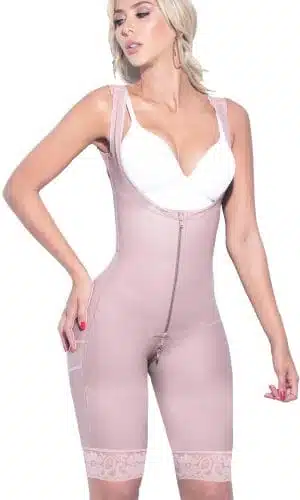

Knowing how to wash a Colombian faja is the difference between a garment that compresses for a year and one that goes soft in a month. A faja is built around one thing: sustained compression. The PowerNet, the latex panel, the hook-and-eye rows, the flexible rods — all of it depends on elastic memory. Hot water, an aggressive spin cycle and a tumble dryer do to that elastic exactly what they do to a swimsuit: they relax it. A faja that has lost its memory can still look fine hanging on the rail, but it stops holding you the way it did in the first month.
This guide covers the routine that keeps a faja working: how to read the care label, hand washing step by step, when machine washing is acceptable, how to dry and store it, how often it really needs washing, and the mistakes that shorten a garment’s life faster than normal wear does. It applies to Colombian fajas with hooks, zippers, rods or latex panels.
Why a faja is not regular laundry
Three parts of a faja are fragile in ways cotton and polyester are not.
The elastic. PowerNet is a knit with elastane running through it. Elastane breaks down with heat and with mechanical stress, which is why a faja washed at 60°C or dried on high heat turns soft and loose in a few cycles.
The latex or rubber panel. Many shaping fajas use an inner latex layer for firmer compression. Latex hates heat and detergents with solvents; it cracks and flakes when it dries out.
The hardware. Hooks, eyes, zippers and steel rods are what give the garment its structure. Loose hooks snag the knit in the drum, and bent rods create pressure points that dig in when you sit.
Start with the care label, not with habit
Before anything else, read the label sewn inside your faja. Manufacturers mark the maximum temperature, whether bleach is allowed and whether the garment can be machine washed at all. Most Colombian shaping brands print a hand-wash symbol, and some add “do not iron” and “do not dry clean”.
The care label answers most of how to wash a Colombian faja before you ever touch water. If the label is missing or unreadable, the standard laundry symbols are worth learning once: a tub with a hand in it means hand wash, a tub with a single dot means cold water, a square with a circle means tumble drying is allowed, and a crossed-out triangle means no bleach. The international care label system is published by the industry body that maintains it, and it is the fastest way to stop guessing.
How to wash a Colombian faja by hand, step by step
This is the method we recommend for any faja worn regularly.
- Close everything first. Fasten every hook, close the zipper and attach any straps. Open hooks are the number one cause of snags and runs.
- Fill a basin with cold water. Lukewarm is tolerable; hot is not. Add a teaspoon of mild detergent — the kind you would use for delicate garments, not a heavy-duty powder.
- Submerge and press. Push the faja under the water and squeeze the suds through the fabric with your hands. Do not scrub, wring or twist.
- Soak for five to ten minutes. No longer. Extended soaking weakens the latex layer and can lift the bonding at the seams.
- Rinse until the water runs clear. Cold water again. Detergent residue left in the knit attracts dirt and can irritate skin.
- Remove water without wringing. Press the faja between your palms, then roll it inside a towel and press again. Never twist it like a rope.

When machine washing is acceptable
Machine washing is part of how to wash a Colombian faja for some garments, provided you protect them. If your label allows it, use these settings:
- Delicate or hand-wash cycle at 30°C or colder.
- Low spin — 400 to 600 rpm maximum. High spin is what deforms the rods.
- A mesh laundry bag, always. It keeps hooks away from the drum and from other garments.
- No fabric softener. Softeners coat the fibers and reduce the grip of the elastic; they also break down latex.
- Wash alone or with similar colors — dark fajas bleed in the first washes.
If your faja has steel rods, a front zipper or a latex inner panel, hand washing is still the safer choice. The machine is a convenience, not an upgrade.
Drying: the step most people get wrong
Drying is also the part of how to wash a Colombian faja that people get wrong most often. Heat is the enemy, and the dryer is where most fajas die.
- Never tumble dry. Even on low, the drum heat accelerates elastic fatigue.
- Do not hang by the straps. The weight of wet fabric stretches them permanently.
- Lay it flat on a towel, in the shade, away from radiators and direct sun. Reshape it with your hands while it is still damp so the panels dry flat.
- Do not iron. If a seam looks creased, steam it from a distance or let it hang in a bathroom after a shower.
Drying flat takes longer, usually eight to twelve hours. That is the trade-off for a garment that keeps compressing after fifty washes instead of five.
How often should you wash it
There is no single schedule that answers how to wash a Colombian faja for everyone; fabric, weather and your skin decide. A faja sits against your skin for hours, so it collects sweat, body oils and dead skin. A practical rhythm:
- Daily wear: wash after two or three wears, or sooner in hot weather or after exercise.
- Post-surgical or postpartum use: wash every one to two days, and always keep a second garment so you are never without compression while one dries.
- Occasional use: wash after every wear. Stored sweat stains the fabric and weakens seams over months.
Storing it between wears
Fold the faja flat and keep it in a drawer. Do not hang it from a strap, do not pile heavy items on top of it, and do not store it in a plastic bag while still damp — trapped moisture is what causes that sour smell that never quite leaves. If you rotate between two garments, each one gets a full day to recover its shape, and both last noticeably longer.
Five mistakes that shorten a faja’s life
Each of these is a shortcut to how to wash a Colombian faja wrong.
- Washing with the hooks open. Snags, runs and bent hardware.
- Fabric softener. It feels nice once and quietly kills the compression.
- Drying on a radiator. Same damage as a dryer, only slower.
- Wringing it out. Twisting stretches the knit in one direction and it never recovers evenly.
- Bleach or strong stain removers. They attack both the elastic and the latex.
Frequently asked questions
How to wash a Colombian faja that has a latex panel?
Hand wash only, in cold water, and never soak it for more than ten minutes. Heat and prolonged soaking are what crack a latex layer, and a cracked panel cannot be repaired.
Can I wash my faja in the washing machine?
Only if the care label allows it, and only on a delicate cycle at 30°C or colder, inside a mesh bag, with low spin. Fajas with steel rods or a latex panel should be hand washed.
How do I remove a stain without damaging the fabric?
Dab — do not rub — with cold water and a drop of mild detergent. For oil-based stains, a small amount of dish soap works; rinse thoroughly afterwards. Avoid chlorine bleach and solvent-based cleaners.
Why does my faja smell even after washing?
Usually because it dried while folded or still damp, or because detergent residue stayed in the knit. Wash again with less detergent, rinse longer and dry it flat in moving air.
Can I wash the gel products with the faja?
No. Body gels are cosmetics and go on skin, not on fabric. Wash them off before putting the faja on, and let the skin dry completely — gel residue in the knit is hard to remove and can irritate.
How long should a faja last with proper care?
With cold hand washing, flat drying and rotation between two garments, a quality Colombian faja typically holds its compression for months of regular use. If it starts rolling at the waist or feels loose across the abdomen after a few weeks, the elastic has given up.
The bottom line
Cold water, mild detergent, no wringing, no dryer, dry flat. That is how to wash a Colombian faja, and it is the whole routine, and it is the difference between a faja that supports you for a season and one that supports you for a year. If you are still choosing your first garment, start with our guide to what a faja is and how it works, then browse the full collection to compare styles, coverage and closures.